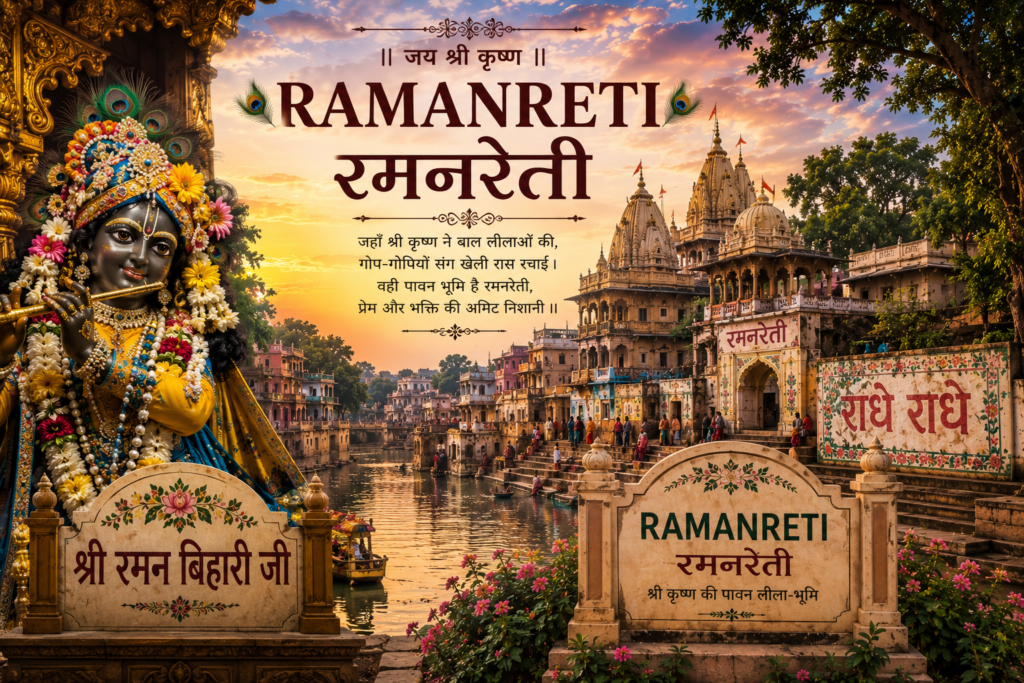

The Sacred History of Raman Reti
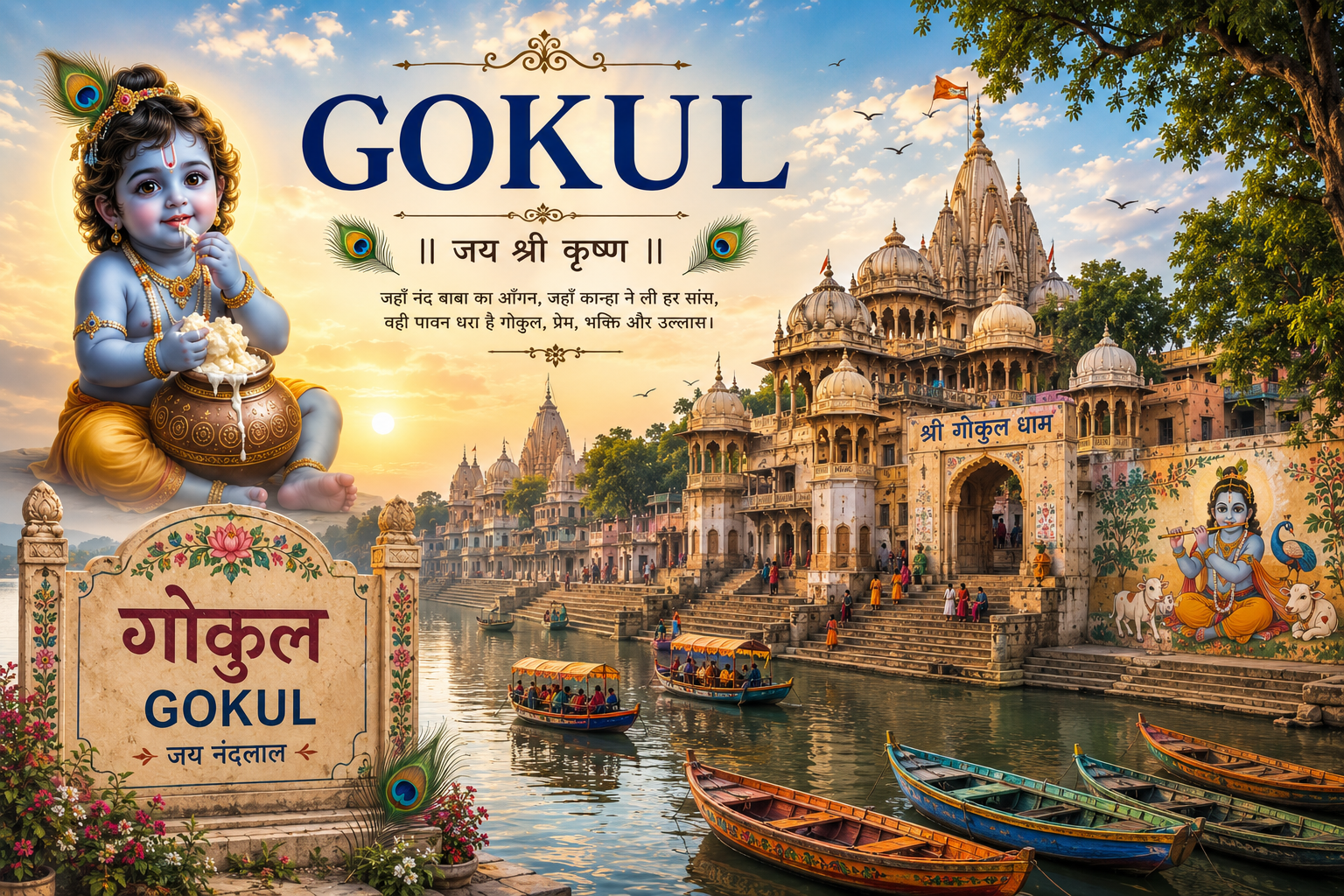
Raman Reti is one of the most revered spiritual sites in the Braj region of Uttar Pradesh, located near Gokul and closely associated with the childhood pastimes of Lord Krishna and his elder brother Balarama. For centuries, devotees have visited this sacred land believing it to be the very place where Krishna played, rested, grazed cows, and spent joyful moments with his friends.
The name “Raman Reti” is derived from two Sanskrit words: “Raman”, meaning divine play or enjoyment, and “Reti”, meaning sand. Together, the name signifies “the sacred sands where Krishna performed his divine pastimes.”
Ancient Origins
The history of Raman Reti is deeply connected to the ancient traditions of Braj and the life of Lord Krishna as described in sacred Hindu scriptures such as:
- Bhagavata Purana
- Vishnu Purana
- Harivamsa
- Garga Samhita
- Brahma Vaivarta Purana
According to these scriptures and local traditions, the region around Gokul was where Krishna spent his early childhood after being brought from Mathura by his father, Vasudeva. The sandy grounds of Raman Reti are believed to have witnessed countless divine leelas performed by Krishna and Balarama.
Krishna’s Childhood Pastimes
Raman Reti is traditionally believed to be the place where Lord Krishna:
- Played with his friends and fellow cowherds.
- Enjoyed games with Balarama.
- Grazed cows in the fields of Braj.
- Rested on the soft sands after playful activities.
- Entertained the residents of Gokul with his divine charm.
Devotees believe that the sacred sand still carries the spiritual vibrations of Krishna’s presence and divine footprints.
A Place of Devotion and Meditation
Over the centuries, Raman Reti became a favored destination for saints, sages, and spiritual seekers. Many great devotees visited the site to meditate on the childhood pastimes of Lord Krishna and deepen their devotion.
The peaceful environment, natural beauty, and spiritual atmosphere of Raman Reti transformed it into an important center for prayer, meditation, and bhakti (devotion).
Raman Reti and the Saints of Braj
Numerous saints and spiritual leaders have praised the significance of Raman Reti throughout history.
The site has been associated with:
- Vaishnava saints
- Bhakti movement followers
- Krishna devotees from across India
- Spiritual seekers visiting the Braj region
Many saints spent time meditating on the sacred sands, believing the area to be spiritually charged by Krishna’s divine presence.
Development of Raman Reti Ashram
In modern times, Raman Reti gained greater prominence with the establishment of spiritual institutions and ashrams dedicated to preserving its sacred heritage.
The Raman Reti Ashram became a major center for:
- Devotional worship
- Spiritual education
- Cow protection (Gaushala)
- Meditation and prayer
- Cultural preservation
The ashram continues to attract thousands of devotees who come to experience the peaceful atmosphere and participate in spiritual activities.
Sacred Traditions and Beliefs
One of the most unique traditions associated with Raman Reti is the practice of walking barefoot on the sacred sands.
Many devotees:
- Sit and meditate on the sand.
- Offer prayers and bhajans.
- Perform parikrama of the holy grounds.
- Collect small amounts of sand as a sacred blessing.
These traditions have been preserved for generations and continue to be an important part of the spiritual experience at Raman Reti.
Raman Reti in Modern Times
Today, Raman Reti is one of the most visited spiritual destinations in the Braj region. Pilgrims traveling to Mathura, Gokul, Vrindavan, Govardhan, Barsana, and Nandgaon often include Raman Reti in their pilgrimage journey.
The site remains known for its:
- Peaceful environment
- Sacred sandy grounds
- Beautiful temples
- Spiritual gatherings
- Traditional Braj culture
Its serene atmosphere offers visitors a rare opportunity to connect with the simplicity and devotion associated with Krishna’s childhood.
Spiritual and Cultural Importance
Raman Reti represents the innocence, joy, and divine playfulness of Lord Krishna’s early years. Unlike grand temples and large pilgrimage centers, Raman Reti is cherished for its simplicity and its deep connection to Krishna’s everyday childhood activities.
The site serves as a reminder that spirituality can be found in the simplest moments of life and that devotion is rooted in love, humility, and remembrance of the divine.
The Eternal Legacy of Raman Reti
For devotees, Raman Reti is not merely a historical location but a living symbol of Krishna’s childhood leelas. Every grain of sand is believed to carry the blessings of the Lord, and every visit offers an opportunity to experience spiritual peace and devotion.
The history of Raman Reti continues to inspire millions of devotees who seek to connect with the divine love and innocence that characterize Lord Krishna’s early life.
Raman Reti remains one of the most sacred treasures of Braj, preserving the timeless memories of Lord Krishna’s childhood and offering spiritual solace to all who visit.