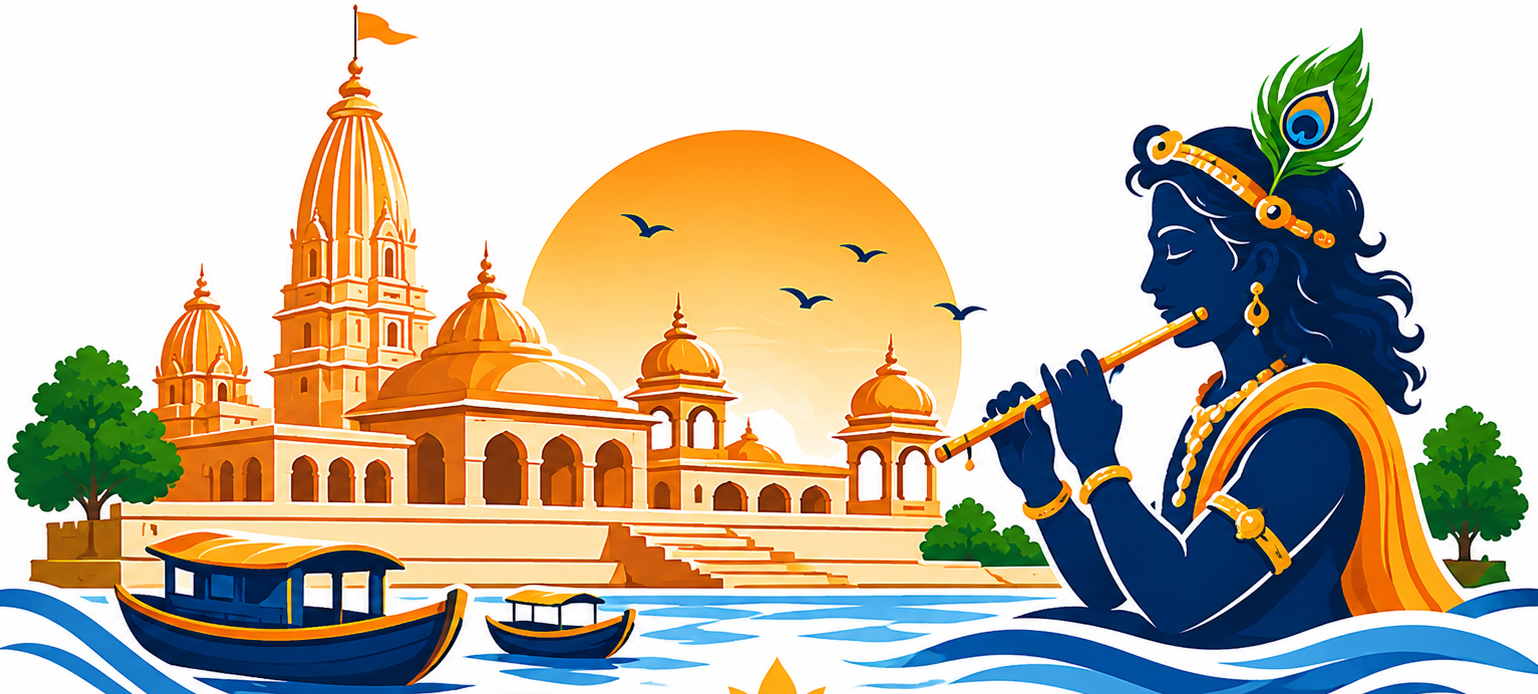
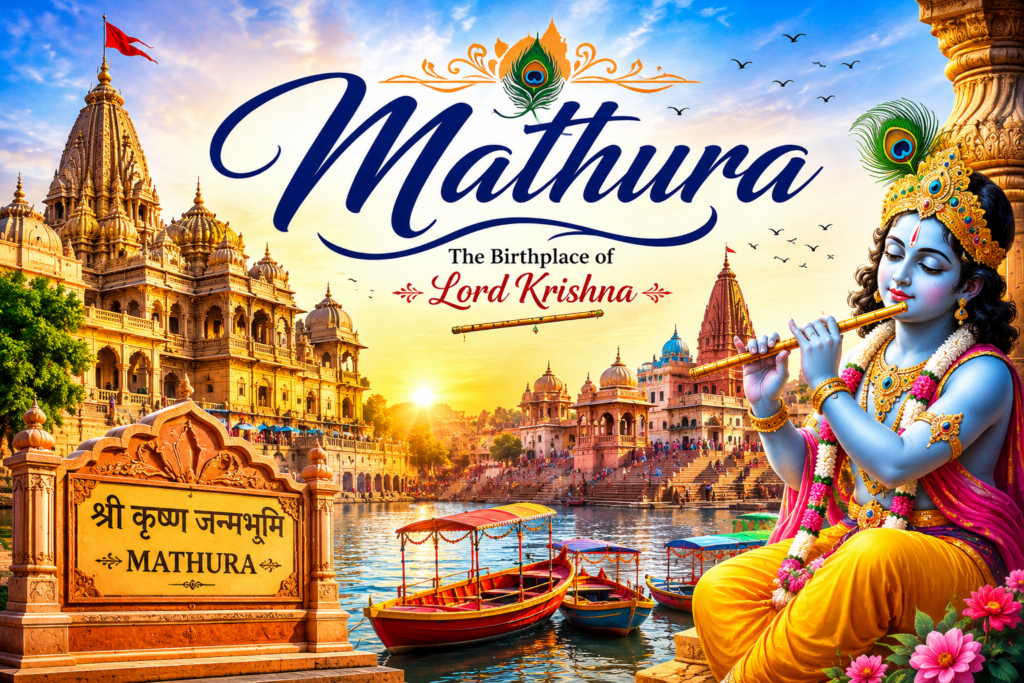

History of Mathura is one of the oldest and most sacred cities in India. Located on the banks of the Yamuna River in the state of Uttar Pradesh, Mathura is renowned worldwide as the birthplace of Lord Krishna. The city has been a center of religion, culture, art, and spirituality for thousands of years and holds immense importance in Hinduism, Buddhism, and Jainism.
Today, Mathura attracts millions of pilgrims and tourists who come to experience its rich heritage, ancient temples, and vibrant cultural traditions.
Ancient History of Mathura
The history of Mathura dates back more than 2,500 years. According to Hindu scriptures, Mathura was founded by King Madhu and later ruled by his son Lavanasura. The city is mentioned in ancient texts such as the Ramayana, Mahabharata, Puranas, and various Buddhist and Jain scriptures.
Mathura became an important political, cultural, and commercial center during ancient India and played a significant role in the development of Indian civilization.
Mathura and Lord Krishna
Mathura is most famous as the birthplace of Lord Krishna, one of the most revered deities in Hinduism. According to Hindu tradition, Lord Krishna was born in a prison cell at Krishna Janmabhoomi, where his parents, Vasudeva and Devaki, were imprisoned by King Kansa.
The story of Krishna’s birth, childhood, and victory over evil forms an essential part of India’s spiritual heritage. The Krishna Janmabhoomi Temple Complex is one of the most visited religious sites in India and a major attraction for devotees from around the world.
Mathura During the Mauryan Period
During the Mauryan Empire (4th–2nd century BCE), Mathura emerged as an important administrative and trade center. Its strategic location on major trade routes contributed to its economic prosperity and cultural development.
The city became a hub for artistic expression, commerce, and religious activities during this period.
The Kushan Era and Mathura School of Art
Mathura reached the height of its cultural and artistic achievements during the Kushan Empire (1st–3rd century CE). It became one of the most important centers of sculpture and artistic production in ancient India.
The famous Mathura School of Art developed during this period and is known for its remarkable stone sculptures of Hindu, Buddhist, and Jain deities. These artistic masterpieces influenced Indian sculpture for centuries and can still be seen in museums and archaeological sites.
Importance in Buddhism
Mathura played a significant role in the spread of Buddhism. Numerous monasteries, stupas, and Buddhist institutions were established in and around the city. Historical records indicate that Buddhist monks and scholars frequently visited Mathura, making it an important center of Buddhist learning and culture.
The Chinese travelers Faxian and Xuanzang documented the flourishing Buddhist presence in Mathura during their visits to India.
Importance in Jainism
Mathura is also considered a sacred city in Jainism. Several Jain Tirthankaras are associated with the region, and ancient Jain temples and inscriptions have been discovered in and around the city.
The city’s religious diversity reflects its long-standing importance as a center of spiritual and cultural exchange.
Medieval History of Mathura
During the medieval period, Mathura continued to flourish as a center of devotion and pilgrimage. Various rulers contributed to the development of temples and religious institutions.
However, the city also faced invasions and periods of destruction. Several temples were damaged during different historical conflicts, but the faith and devotion of the people ensured that Mathura remained an important pilgrimage destination.
Mathura Under Mughal Rule
During the Mughal era, Mathura witnessed both challenges and development. While some temples faced destruction, the city’s religious significance remained intact. Over time, many temples were rebuilt and restored by devotees and local rulers.
The spiritual traditions of Mathura continued to thrive despite political changes.
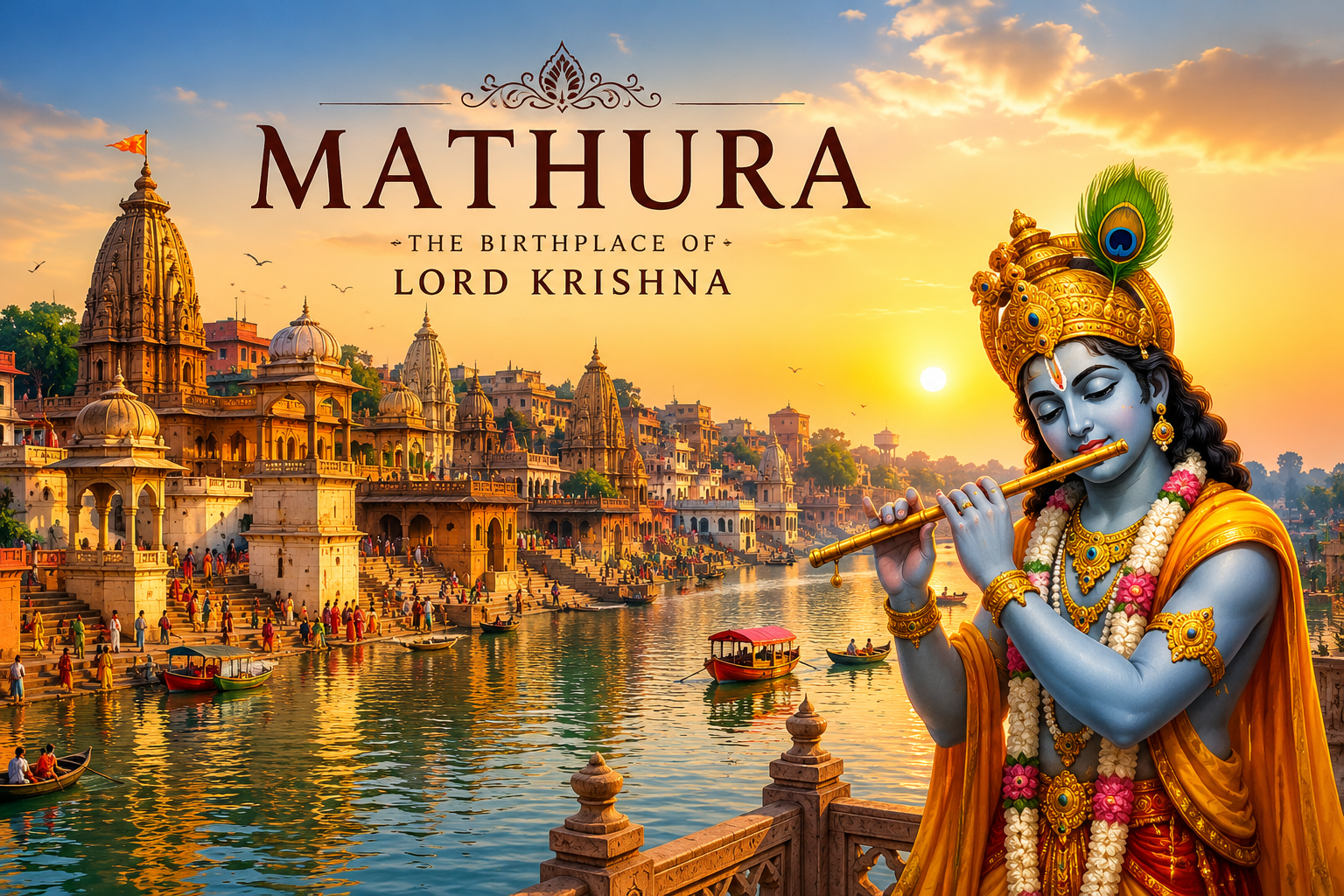
Modern Mathura
Today, Mathura is a major religious and tourist destination in India. The city has developed modern infrastructure while preserving its ancient heritage and cultural traditions.
Thousands of visitors come to Mathura every day to explore its temples, ghats, museums, and historical landmarks.
Famous Historical and Religious Places in Mathura
Krishna Janmabhoomi Temple
The sacred birthplace of Lord Krishna and one of the most important pilgrimage sites in Hinduism.
Dwarkadhish Temple
A famous temple dedicated to Lord Krishna known for its beautiful architecture and religious significance.
Vishram Ghat
A sacred bathing ghat on the Yamuna River where Lord Krishna is believed to have rested after defeating Kansa.
Government Museum Mathura
One of India’s oldest museums, showcasing ancient sculptures, artifacts, and archaeological treasures.
Gita Mandir
A popular temple featuring inscriptions of the Bhagavad Gita and beautiful architecture.
Festivals Celebrated in Mathura
Mathura is famous for its grand celebrations of:
- Krishna Janmashtami
- Holi Festival
- Radhashtami
- Govardhan Puja
- Diwali
- Kartik Festivals
These festivals attract millions of devotees and tourists from across India and the world.
Cultural Heritage of Mathura
Mathura is known for its:
- Classical Music and Dance
- Religious Processions
- Traditional Handicrafts
- Temple Architecture
- Spiritual Literature
- Braj Culture and Traditions
The city’s rich cultural heritage continues to influence Indian art, religion, and spirituality.
Why Visit Mathura?
Visitors come to Mathura to:
- Experience the birthplace of Lord Krishna
- Explore ancient temples and monuments
- Learn about Indian history and culture
- Participate in religious festivals
- Enjoy the spiritual atmosphere of Braj Bhoomi
Conclusion
Mathura is much more than a city; it is a living symbol of India’s spiritual and cultural heritage. With its ancient history, sacred temples, rich traditions, and association with Lord Krishna, Mathura continues to inspire millions of people worldwide. Whether you are a pilgrim, history enthusiast, or traveler, Mathura offers a unique journey into the heart of India’s timeless civilization.
http://www.aboutmathura.com website gave me real information. Very nice plateform in mathura
Thank you for your visit..