
The Sacred History of Bhandirvan
Bhandirvan, also known as Bhandirvana, is one of the twelve sacred forests (Dwadash Vanas) of Braj and holds a unique place in the spiritual history of Lord Krishna and Radha Rani. Located near Mant in the Mathura district of Uttar Pradesh, Bhandirvan has been revered for thousands of years as a divine forest where numerous childhood pastimes of Lord Krishna took place.
Among all the forests of Braj, Bhandirvan is especially famous for its association with the divine marriage of Radha and Krishna, making it one of the most sacred pilgrimage destinations in the Vaishnava tradition.
Ancient Origins
The history of Bhandirvan dates back to the era of Lord Krishna and is deeply rooted in Hindu scriptures such as:
- Bhagavata Purana
- Garga Samhita
- Brahma Vaivarta Purana
- Harivamsa
- Various Vaishnava texts and Braj traditions
According to these sacred texts, Bhandirvan was once a dense and beautiful forest filled with banyan trees, flowering plants, sacred groves, and grazing lands where Krishna and his friends spent much of their time.
The forest became an important setting for many divine leelas that continue to be remembered and celebrated by devotees today.
The Divine Marriage of Radha and Krishna
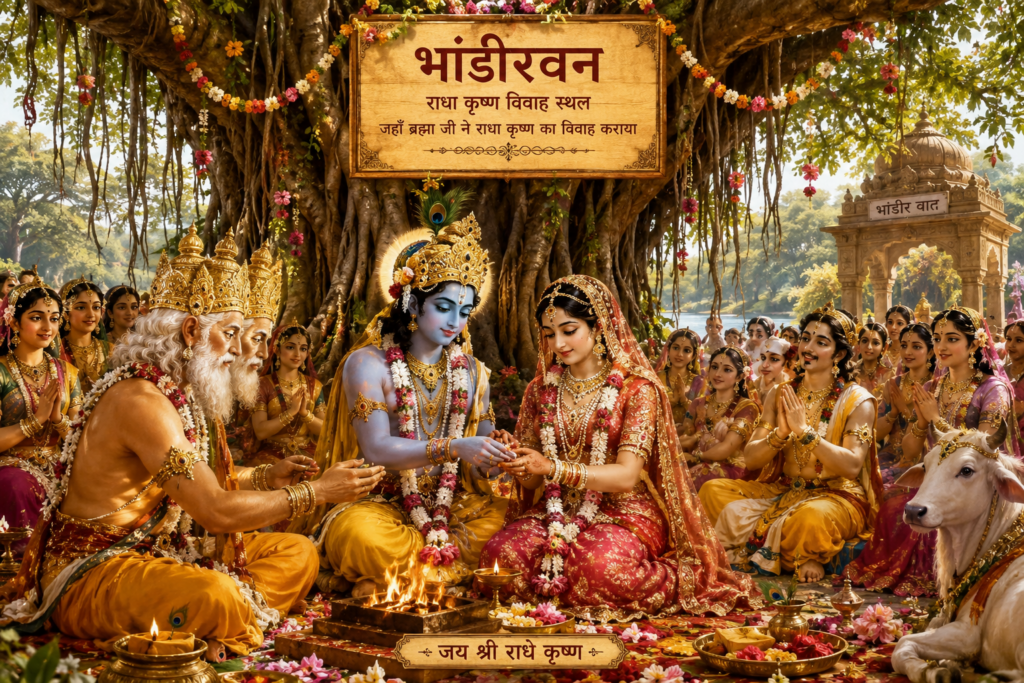
The most significant event associated with Bhandirvan is the sacred Radha Krishna Vivah Leela.
According to Vaishnava tradition, Lord Brahma himself descended to Bhandirvan and performed the celestial marriage ceremony of Radha and Krishna beneath the sacred Bhandir Vat (Banyan Tree).
This divine wedding is believed to have taken place in a spiritual and transcendental form, witnessed only by selected divine beings. The event symbolizes the eternal and inseparable union of Radha and Krishna and remains one of the most revered stories in Braj.
Because of this sacred association, Bhandirvan is often referred to as the “Divine Wedding Place of Radha Krishna.”
Krishna’s Childhood Pastimes
Bhandirvan was one of Lord Krishna’s favorite places during his childhood in Braj.
According to Braj traditions, Krishna:
- Played with his cowherd friends.
- Grazed cows in the forest.
- Rested beneath the shade of large banyan trees.
- Performed joyful leelas with Balarama.
- Met with Radha Rani and the gopis.
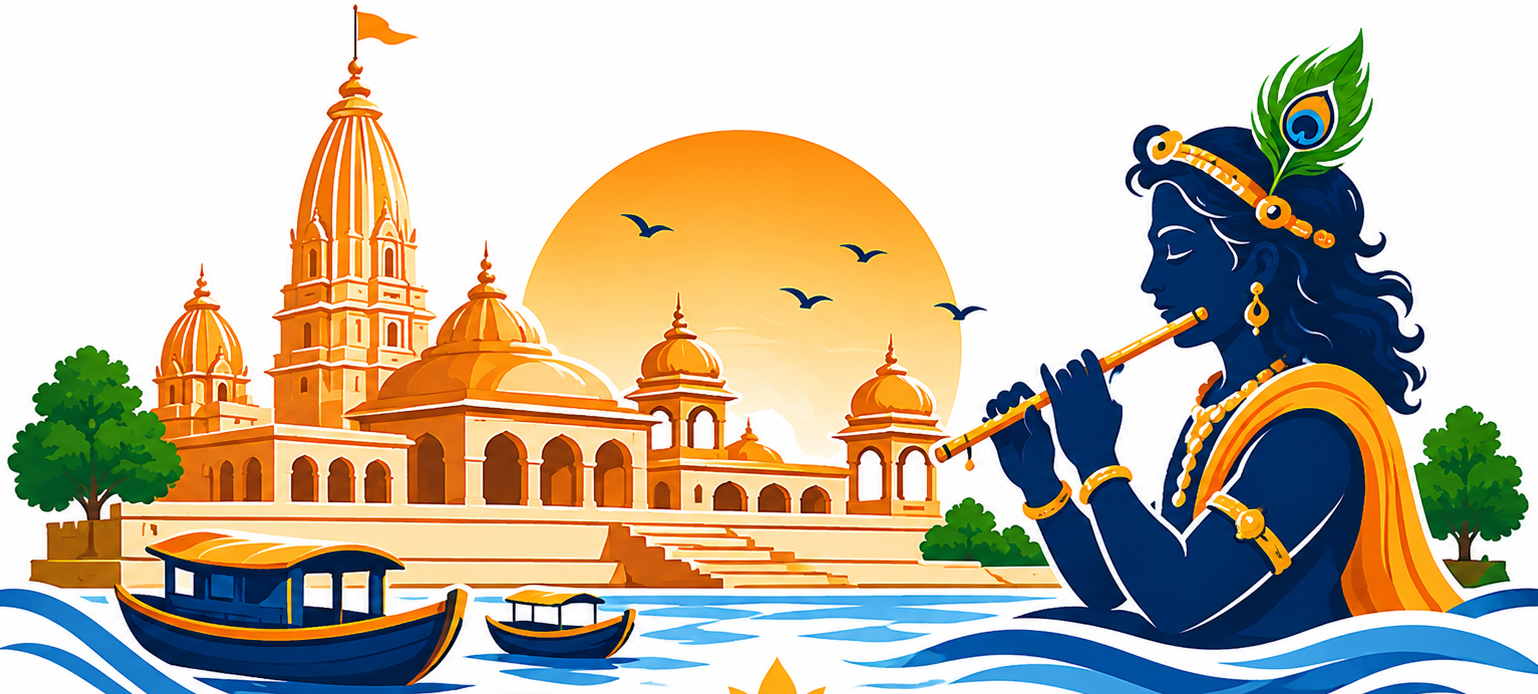
- Entertained the residents of Braj with his divine flute.
These pastimes transformed Bhandirvan into a sacred place of devotion and remembrance.
Bhandir Vat – The Sacred Banyan Tree
The heart of Bhandirvan’s history is the revered Bhandir Vat, an ancient banyan tree associated with the divine marriage ceremony of Radha and Krishna.
For centuries, devotees, saints, and pilgrims have visited this sacred tree to offer prayers and meditate on the eternal love of Radha Krishna.
Although the original tree has undergone natural changes over time, the site continues to be worshipped as one of the holiest places in Braj.
Bhandirvan in Vaishnava Tradition
Throughout history, Bhandirvan has been an important center of devotion for followers of various Vaishnava traditions.
Prominent saints who helped preserve and promote the significance of Braj included:
- Sri Chaitanya Mahaprabhu
- Rupa Goswami
- Sanatana Goswami
- Jiva Goswami
- Narayan Bhatt
- Vallabhacharya
These saints documented the sacred sites of Braj and encouraged devotees to visit places associated with Krishna’s divine pastimes, including Bhandirvan.
Development as a Pilgrimage Site
Over the centuries, temples, shrines, and devotional centers were established around Bhandirvan to commemorate its spiritual significance.
The site gradually became an important stop during:
- Braj Chaurasi Kos Yatra
- Braj Mandal Parikrama
- Krishna pilgrimage tours
- Radha Krishna devotional journeys
Pilgrims visiting Mathura, Vrindavan, Govardhan, Barsana, Nandgaon, and Gokul often include Bhandirvan in their spiritual itinerary.
Sacred Sites of Historical Importance
Bhandir Vat
The sacred banyan tree associated with the divine marriage of Radha and Krishna.
Radha Krishna Vivah Sthal
The holy location where Lord Brahma is believed to have solemnized the celestial wedding ceremony.
Dauji Temple
A temple dedicated to Lord Balarama, preserving the memories of Krishna and Balarama’s childhood activities.
Sacred Forest Area
The remaining groves and forested areas continue to reflect the spiritual atmosphere described in ancient texts.
Bhandirvan During the Bhakti Movement
During the medieval Bhakti movement, Bhandirvan gained renewed importance as saints and devotees traveled throughout Braj to rediscover the sacred sites associated with Krishna’s life.
Their writings, devotional songs, and teachings helped preserve the spiritual heritage of Bhandirvan and introduced its significance to future generations.
Bhandirvan in Modern Times
Today, Bhandirvan remains a peaceful and spiritually significant destination visited by thousands of pilgrims each year.
Despite modern development in surrounding areas, the site continues to maintain its devotional atmosphere and historical importance within the Braj region.
Visitors come to:
- Offer prayers at Bhandir Vat.
- Participate in Braj pilgrimages.
- Meditate in the sacred environment.
- Learn about Radha Krishna’s divine pastimes.
- Experience the spiritual heritage of Braj.
The Eternal Significance of Bhandirvan
For devotees, Bhandirvan is far more than a historical forest. It represents the eternal love, devotion, and spiritual unity of Radha and Krishna.
Its history reminds devotees of the divine relationship that forms the foundation of Bhakti traditions throughout India and the world.
Every tree, pathway, and sacred spot within Bhandirvan carries memories of Krishna’s childhood leelas and Radha Krishna’s eternal love, making it one of the most cherished spiritual destinations in Braj.
Bhandirvan stands today as a timeless symbol of divine love and devotion, preserving one of the most sacred chapters in the spiritual history of Radha and Krishna.