
The Sacred History of Barsana
History of Barsana, located in the Braj region of Uttar Pradesh, is one of the holiest towns associated with the divine love of Radha and Krishna. Revered as the birthplace of Shri Radha Rani, Barsana holds immense spiritual, cultural, and historical significance for devotees across the world.
Nestled among picturesque hills and ancient temples, Barsana has been a center of devotion and pilgrimage for centuries. Its sacred landscapes, vibrant traditions, and timeless connection to Radha Krishna make it one of the most cherished destinations in Hinduism.
Ancient Origins
According to Hindu scriptures and Braj traditions, Barsana was the kingdom of King Vrishabhanu and Queen Kirti, the earthly parents of Radha Rani. It is believed that Radha Rani spent her childhood in Barsana before becoming eternally associated with Lord Krishna of nearby Vrindavan.
Ancient texts describe Barsana as a place filled with divine love, where Radha and Krishna performed numerous spiritual pastimes that continue to inspire devotees today.
The town derives its name from the Sanskrit word “Vrishabhanupura”, which over time evolved into Barsana.
The Land of Radha Rani
Barsana is unique among pilgrimage destinations because it is primarily dedicated to Radha Rani rather than Krishna alone. In the Vaishnava tradition, Radha is worshipped as the embodiment of divine love, devotion, compassion, and spiritual grace.
Devotees believe that Barsana represents the highest expression of bhakti (devotion), where the eternal love between Radha and Krishna is celebrated and remembered through rituals, festivals, and daily worship.
The Four Sacred Hills
Barsana is built around four prominent hills, which are believed to symbolize the four heads of Lord Brahma.
These sacred hills are traditionally associated with:
- Bhanugarh
- Vilasgarh
- Maan Garh
- Dan Garh
Ancient temples and sacred sites were established on these hills, making Barsana a spiritually significant landscape within the Braj region.
Development as a Pilgrimage Center
For centuries, saints, sages, and devotees visited Barsana to meditate on the divine pastimes of Radha and Krishna. During the medieval period, various rulers and wealthy patrons contributed to the construction and restoration of temples, kunds, and pilgrimage facilities.
Prominent Vaishnava saints played a vital role in preserving the traditions of Barsana and promoting its importance within the broader Braj pilgrimage circuit.
The town gradually became one of the most important centers of Radha devotion in India.
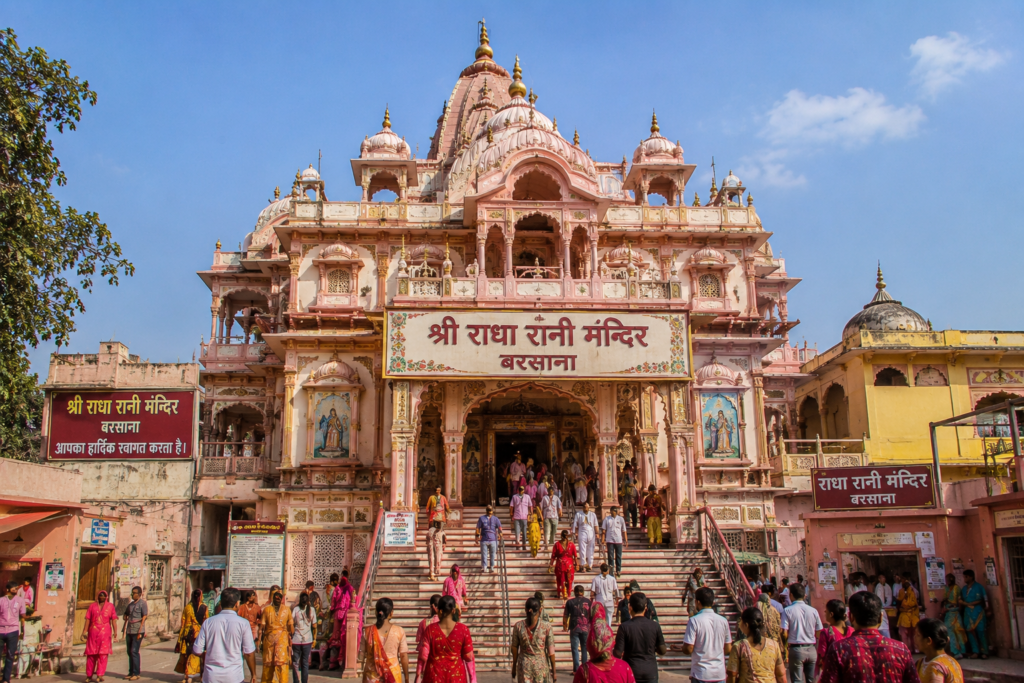
Shri Radha Rani Temple (Ladli Ji Temple)
The most significant historical landmark in Barsana is the Shri Radha Rani Temple, also known as Ladli Ji Temple.
Situated atop Bhanugarh Hill, the temple is believed to have been established centuries ago and later expanded by devotees and royal patrons. Today, it serves as the spiritual heart of Barsana and attracts millions of pilgrims annually.
The temple symbolizes the eternal presence of Radha Rani and remains one of the most revered shrines in the Braj region.
Sacred Sites of Historical Importance
Maan Mandir
Maan Mandir is associated with the divine pastime in which Radha expressed loving displeasure (maan) toward Krishna. The site has long been a center of devotion and meditation.
Kirti Mandir
Dedicated to Kirti Maiya, the mother of Radha Rani, this temple preserves the memory of Radha’s childhood and family heritage.
Prem Sarovar
One of the most beautiful sacred lakes in Braj, Prem Sarovar is believed to symbolize the divine love of Radha and Krishna and has been revered by pilgrims for centuries.
Sankari Khor
A narrow passage linked to Krishna’s playful interactions with the gopis, Sankari Khor remains an important historical and spiritual attraction.
The Legacy of Lathmar Holi
Barsana is internationally famous for its unique celebration of Lathmar Holi, a centuries-old tradition rooted in the playful relationship between Radha and Krishna.
According to local legends, Krishna visited Barsana with his friends to tease Radha and her companions. In response, the women playfully chased them away with sticks (lathis). This tradition continues today and attracts visitors from across India and around the world.
Lathmar Holi has become one of the most iconic cultural festivals of Braj and a symbol of Barsana’s living heritage.
Barsana in Modern Times
Today, Barsana remains one of the most important pilgrimage destinations in India. Improved infrastructure, spiritual centers, and tourism facilities have made the town accessible to millions of visitors while preserving its sacred traditions.
Pilgrims continue to visit Barsana throughout the year to seek the blessings of Radha Rani, participate in festivals, and experience the devotional atmosphere that has defined the town for centuries.
The Eternal Significance of Barsana
For devotees, Barsana is not merely a historical town but the eternal abode of Radha Rani. Its temples, hills, kunds, and sacred pathways preserve a spiritual legacy that transcends time.
The history of Barsana reflects the enduring power of divine love, devotion, and faith. Every corner of the town reminds visitors of the eternal bond between Radha and Krishna and the spiritual teachings that continue to inspire millions around the world.
Barsana stands today as a timeless symbol of devotion, divine love, and the sacred heritage of Braj, welcoming all who seek spiritual peace and the blessings of Radha Rani.