
The Sacred History of Vrindavan
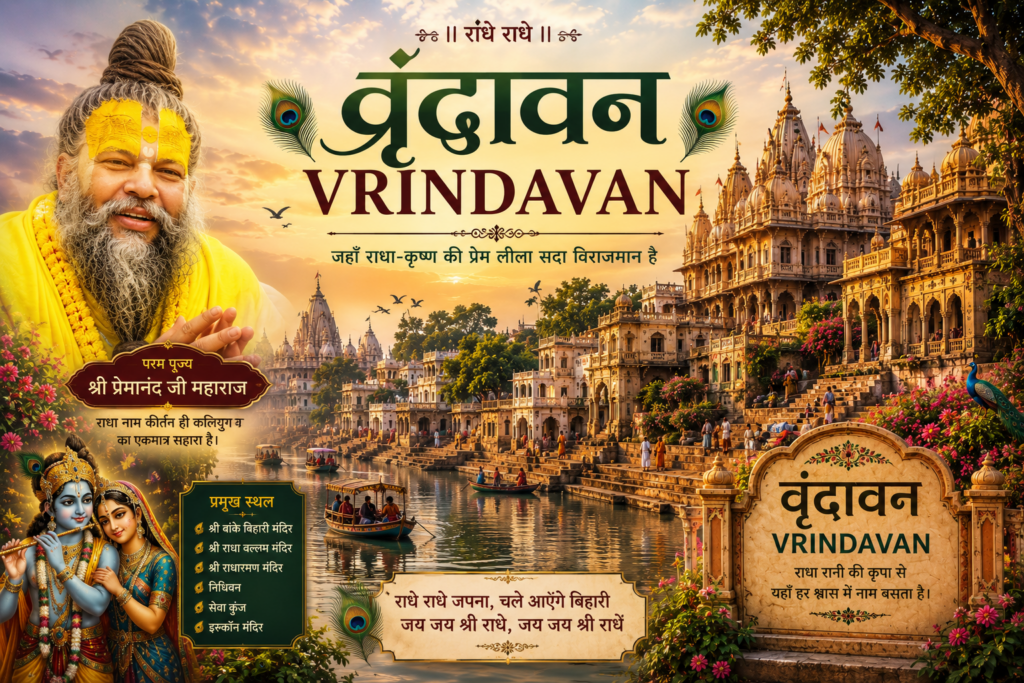
History of Vrindavan is one of the most revered spiritual destinations in India and holds a unique place in Hindu history and devotion. Located in the Braj region of Uttar Pradesh along the banks of the holy Yamuna River, Vrindavan is celebrated as the divine playground of Lord Krishna, where he spent his childhood and youth performing countless sacred pastimes.
The name “Vrindavan” is derived from two Sanskrit words: “Vrinda”, another name for the sacred Tulsi plant, and “Van”, meaning forest. Ancient scriptures describe Vrindavan as a beautiful forest filled with Tulsi groves, flowering trees, and sacred ponds where Lord Krishna and Radha shared their divine pastimes.
Ancient Origins
The history of Vrindavan dates back thousands of years and is deeply rooted in Hindu scriptures such as the Bhagavata Purana, Mahabharata, Vishnu Purana, and various Vaishnava texts. These sacred writings describe Vrindavan as the place where Lord Krishna performed his childhood leelas (divine acts), including:
- Playing the flute to enchant the gopis.
- Performing the divine Raas Leela with Radha and the gopis.
- Grazing cows in the forests of Braj.
- Defeating demons sent by King Kansa.
- Lifting Govardhan Hill to protect the people of Braj.
These events transformed Vrindavan into one of the holiest pilgrimage destinations in Hinduism.
Rediscovery of Vrindavan
Over time, many of Vrindavan’s sacred sites became hidden due to changing landscapes and historical events. In the 16th century, the great saint and philosopher Sri Chaitanya Mahaprabhu visited Vrindavan and played a crucial role in reviving its spiritual significance.
Inspired by his vision, renowned Vaishnava saints including:
- Rupa Goswami
- Sanatana Goswami
- Jiva Goswami
- Raghunath Das Goswami
- Gopal Bhatta Goswami
- Raghunath Bhatta Goswami
rediscovered and documented many of the sacred places associated with Lord Krishna’s pastimes, laying the foundation for modern Vrindavan.
Growth as a Spiritual Center
During the Mughal and Rajput periods, numerous temples were constructed in Vrindavan, attracting devotees from across India. Wealthy kings, merchants, and devotees contributed to the development of the town by building temples, ghats, gardens, and dharamshalas.
Some of the oldest and most historically significant temples include:
- Govind Dev Temple
- Madan Mohan Temple
- Radha Raman Temple
- Radha Damodar Temple
- Radha Vallabh Temple
These temples remain important centers of worship and pilgrimage today.
Vrindavan in Modern Times
Today, Vrindavan is a globally recognized spiritual destination visited by millions of devotees every year. The city has evolved while preserving its deep-rooted traditions and devotional atmosphere.
Modern landmarks such as Prem Mandir, the ISKCON Krishna-Balaram Temple, and numerous ashrams have further enhanced Vrindavan’s status as a center of Krishna devotion and spiritual learning.
The city continues to attract pilgrims, saints, scholars, and visitors from around the world who come to experience its divine energy, sacred temples, and vibrant festivals.
Cultural and Spiritual Importance
Vrindavan is not merely a historical town; it is considered a living spiritual heritage. The traditions of bhakti (devotion), kirtan (devotional singing), and seva (selfless service) continue to flourish throughout the city.
Major festivals celebrated with great enthusiasm include:
- Janmashtami
- Radhashtami
- Holi
- Jhulan Yatra
- Govardhan Puja
- Kartik Deepdaan
These celebrations preserve the timeless culture and spiritual legacy of Braj.
The Eternal History of Vrindavan
For devotees, Vrindavan is more than a geographical location—it is a sacred realm of divine love, devotion, and spiritual awakening. Every temple, ghat, forest, and pathway carries memories of Lord Krishna’s eternal pastimes and continues to inspire millions of hearts across the world.
Vrindavan remains a timeless symbol of devotion, where history, faith, and divine love come together to create one of the world’s most cherished spiritual destinations.