
The Sacred History of Dauji Temple
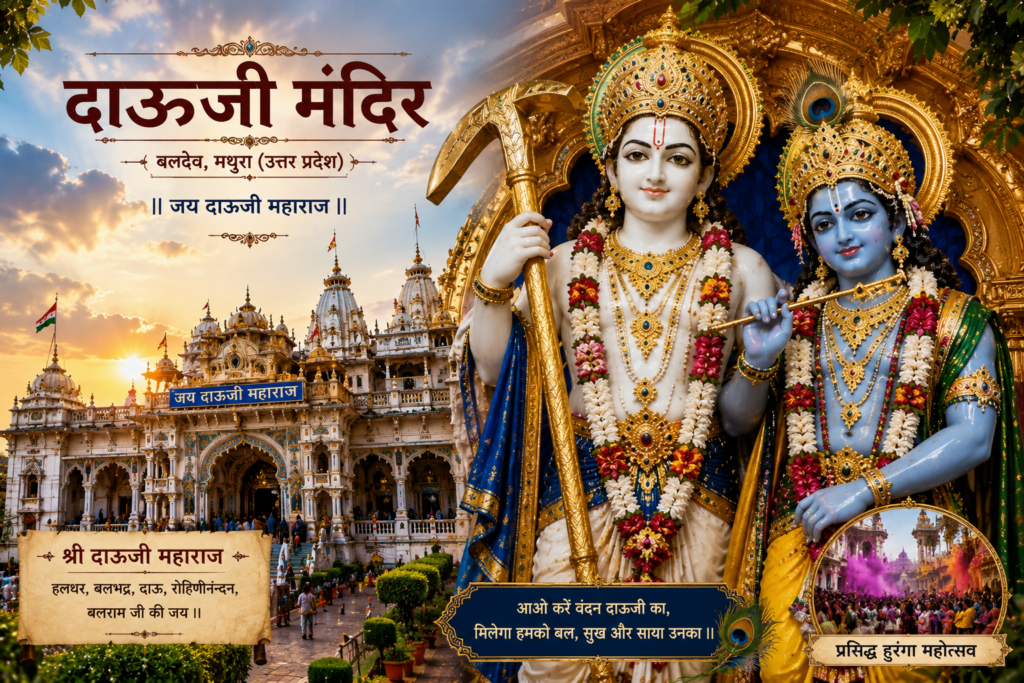
Dauji Temple, also known as Shri Dauji Maharaj Temple, is one of the oldest and most revered temples in the Braj region of Uttar Pradesh. Located in the town of Baldeo, near Mathura, the temple is dedicated to Lord Balarama (Baladeva), the elder brother of Lord Krishna. For centuries, the temple has been a major center of devotion, pilgrimage, and spiritual heritage, attracting devotees from across India and around the world.
The temple holds a unique place in Hindu tradition as one of the most important shrines dedicated to Lord Balarama, who is worshipped as the embodiment of strength, righteousness, and divine power.
Ancient Origins
The history of Dauji Temple is deeply connected with the sacred land of Braj and the divine pastimes of Lord Krishna and Lord Balarama.
According to Hindu traditions and ancient scriptures, the region of Baldeo was closely associated with Lord Balarama’s activities during the Dwapara Yuga. The area became a center of worship for devotees who revered Balarama as the protector of dharma and the elder brother of Krishna.
Over time, the site evolved into one of the most significant pilgrimage destinations in Braj.
Discovery of the Sacred Deities
According to local legends and temple traditions, the sacred deities of Lord Balarama and his consort Revati were discovered at the present temple site centuries ago.
Devotees believe that the idols are ancient and possess immense spiritual significance. The deity of Lord Balarama is worshipped in his majestic form, holding symbols that represent strength, protection, and divine authority.
The discovery of these sacred idols led to the establishment of regular worship and eventually the construction of the temple.
Establishment of the Temple
Historical records and temple traditions indicate that the present temple structure was developed and expanded during the medieval period under the patronage of devotees, local rulers, and religious leaders.
The temple gradually emerged as an important center of Vaishnava devotion and became a focal point for pilgrims visiting the Braj region.
Its spiritual significance continued to grow as saints and devotees spread awareness about the sacred shrine dedicated to Dauji Maharaj.
Lord Balarama in Braj Tradition
In Braj culture, Lord Balarama is affectionately known as Dauji, meaning “elder brother.”
He is revered for:
- Protecting the people of Braj.
- Supporting Lord Krishna in his divine missions.
- Demonstrating strength and courage.
- Upholding righteousness and truth.
- Guiding devotees toward spiritual growth.
The people of Braj have maintained a deep connection with Dauji Maharaj for generations, making the temple an important symbol of regional faith and devotion.
Architectural Development
Over the centuries, Dauji Temple underwent various renovations and expansions.
The temple complex features:
- Traditional Braj-style architecture
- Decorative gateways
- Spacious courtyards
- Sacred prayer halls
- Ancient carvings and artwork
- Pilgrim facilities
The architecture reflects the rich religious and cultural heritage of the Mathura region.
Dauji Temple and the Bhakti Movement
During the Bhakti Movement, many saints and spiritual leaders traveled through Braj, helping preserve and promote the worship of Krishna and Balarama.
The temple became an important destination for devotees seeking spiritual inspiration and divine blessings.
The continued efforts of saints, devotees, and temple caretakers helped maintain the temple’s religious importance throughout the centuries.
The Famous Huranga Festival
One of the most distinctive chapters in the history of Dauji Temple is the celebration of Huranga, a unique festival held immediately after Holi.
The tradition has been practiced for generations and is famous throughout India. During Huranga, devotees participate in joyful celebrations featuring colors, music, devotional songs, and cultural performances.
Today, the festival attracts thousands of visitors and has become an integral part of the temple’s historical and cultural identity.
Dauji Temple in Modern Times
Today, Dauji Temple remains one of the most important pilgrimage destinations in the Braj region. Pilgrims visiting Mathura, Vrindavan, Govardhan, Barsana, Nandgaon, and Gokul often include Dauji Temple in their spiritual journey.
The temple continues to preserve:
- Ancient worship traditions
- Braj cultural heritage
- Religious festivals
- Devotional music and kirtans
- Community service and spiritual education
Its spiritual atmosphere continues to inspire devotees from all walks of life.
Religious and Cultural Importance
Dauji Temple is not only a place of worship but also a symbol of Braj’s rich cultural heritage. It represents the values of strength, loyalty, brotherhood, devotion, and service embodied by Lord Balarama.
The temple plays a significant role in preserving the traditions of Braj and passing them on to future generations.
The Eternal Legacy of Dauji Maharaj
For devotees, Dauji Temple is much more than a historical monument. It is a living center of faith where the divine presence of Lord Balarama continues to bless countless pilgrims.
Its history reflects centuries of devotion, spiritual practice, and cultural continuity. Every prayer offered here strengthens the timeless bond between devotees and Dauji Maharaj.
Dauji Temple stands today as one of the most sacred landmarks of Braj, preserving the glorious legacy of Lord Balarama and welcoming devotees with divine grace and blessings.